



Executive Summary
As AI moves into production, MLOps is critical to reliable machine learning operations. This article explains MLOps skill density, why Manila offers strong offshore advantages, and how organizations build secure, scalable MLOps teams in the Philippines—helping leaders evaluate whether offshore AI operations are the right next step.
Introduction
Most organizations today can build machine learning models. The real challenge begins after experimentation—when models need to be deployed, monitored, secured, and continuously improved in production.
This is where machine learning operations (MLOps) become critical. As companies scale AI initiatives, they’re no longer just looking for data scientists. They need teams that can run AI operations offshore with the same reliability as any core production system.
One way leaders evaluate where to build these teams is by looking at skill density. In this context, Manila, and broader operations in the Philippines, is increasingly part of that conversation.
What Is MLOps Skill Density?
MLOps skill density refers to how concentrated and accessible the hybrid skills required for production‑grade machine learning are within a specific location.
It’s not about how many people carry the title “MLOps engineer.” Instead, it’s about whether a market has enough overlap across:
- DevOps and cloud engineering
- Data engineering
- Software engineering
- Machine learning workflows
High skill density makes it easier to form teams that can support the full lifecycle of machine learning, from training to deployment to long‑term monitoring.
Why MLOps Depends on Hybrid Skills, Not Single Roles
Unlike traditional software development, MLOps sits between multiple disciplines. Production AI systems rely on:
- Infrastructure automation
- CI/CD pipelines
- Data pipelines and feature stores
- Monitoring, alerting, and incident response
This is why strong MLOps environments are built on hybrid skills, not unicorn hires. In practice, effective teams are often composed of:
- DevOps engineers who support DevOps machine learning Philippines workloads
- Data engineers ensuring reliable inputs and retraining pipelines
- Software engineers enabling scalable model serving
Markets that support this cross‑functional overlap tend to perform better when companies build MLOps teams offshore.
How to Measure MLOps Skill Density by City
How to measure MLOps skill density by city?
Instead of counting job titles, look at the availability of adjacent engineering roles, real production and cloud experience, monitoring and operational maturity, and the ability to scale teams sustainably.
These indicators provide a more accurate picture than surface‑level AI hiring data.
Why Manila Shows Strong MLOps Skill Density Signals
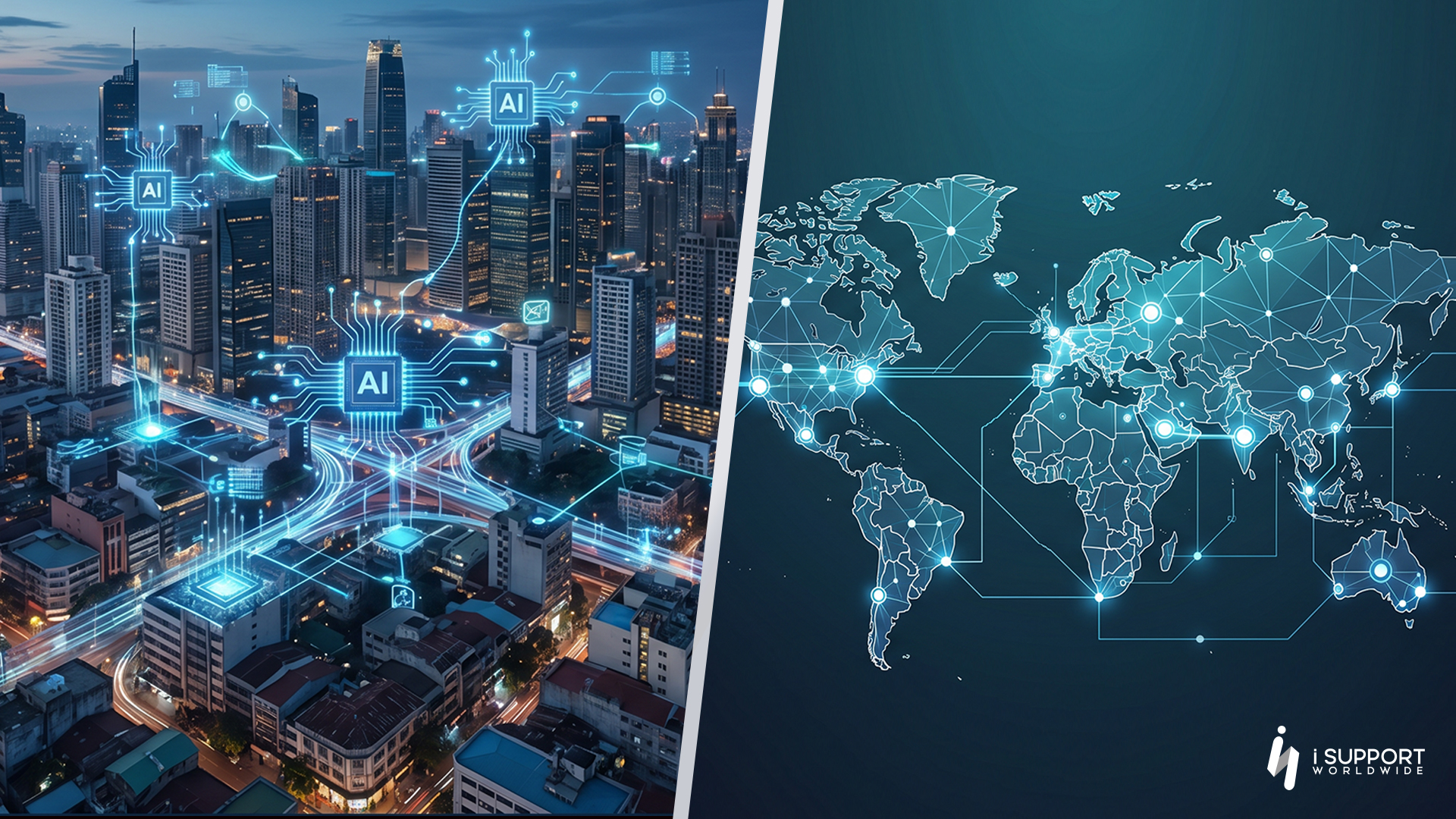
Adjacent Talent Pools
Manila benefits from a large base of IT professionals in cloud engineering, DevOps, backend development, and data engineering. This makes it feasible to form ML platform engineering Manila teams without relying on scarce, narrowly specialized hires.
As a result, companies evaluating MLOps talent Philippines often find that the surrounding ecosystem supports faster team assembly and knowledge sharing.
Operational Maturity
Another advantage of operations in the Philippines is long‑standing experience with:
- 24/7 production support
- Monitoring and alerting
- Incident escalation and documentation
These practices are directly transferable to MLOps, where model reliability matters just as much as model accuracy.
Offshore Readiness
Manila is also well‑suited for embedded delivery models. Many organizations successfully run an offshore MLOps team Philippines as an extension of their onshore engineering organization, rather than as a siloed support function.
MLOps Roles Needed for Production AI (and How to Build Them Offshore)
What MLOps roles are needed for production AI?
The answer depends on maturity, but successful teams are usually built in phases.
Phase 1: Enable Production
- MLOps engineers Manila are responsible for deployment workflows, registries, and automation
- Cloud or DevOps engineers supporting CI/CD and infrastructure
Phase 2: Improve Reliability
- Site reliability engineers focused on ML workloads
- Data engineers maintaining pipeline health and retraining inputs
Phase 3: Scale and Govern
- Platform or technical leads
- Cost, performance, and governance specialists
This phased approach reduces risk and allows organizations to build an MLOps team offshore without over‑hiring early.
What Offshore MLOps Teams Typically Own
A well-structured offshore MLOps team commonly takes responsibility for:
- CI/CD pipelines for models and features
- Model registries and version control
- Batch and real‑time serving infrastructure
- Model deployment monitoring pipelines for drift, latency, and cost
- Runbooks, alerts, and on‑call processes
Clear ownership boundaries ensure offshore teams strengthen reliability rather than introduce operational friction.
Offshore MLOps Best Practices for Security and Governance
What are offshore MLOps best practices for security?
Security and governance must be designed into the operating model from day one.
Best practices include:
- Least‑privilege access and secrets management
- Clear data handling and residency strategies
- Audit trails, lineage, and traceability
- Defined escalation paths and accountability
When these controls are in place, offshore MLOps delivery can meet the same standards as onshore execution.
What Successful Offshore MLOps Execution Looks Like in Practice
In practice, successful offshore MLOps execution depends less on tooling and more on operational alignment.
Teams perform best when responsibilities for model deployment, monitoring, and incident response are clearly defined from the start, with offshore engineers owning the reliability of production pipelines while working closely with onshore stakeholders.
This approach ensures that model performance, data drift, and system health are actively managed—allowing machine learning operations to scale without creating security gaps, handoff friction, or single points of failure.
Why Companies Choose iSupport Worldwide for Offshore MLOps
iSupport Worldwide helps organizations build dedicated teams for AI operations offshore, with a focus on reliability, governance, and long‑term scalability.
By leveraging Manila’s MLOps skill density, companies gain:
- Access to experienced, cross‑functional engineers
- Embedded offshore teams aligned to internal workflows
- Operational discipline suited for production AI systems
If your goal is to move beyond prototypes and run dependable AI in production, offshore MLOps—done right—can be a strategic advantage.
Interested in building a secure, production‑ready offshore MLOps team?
Talk to iSupport Worldwide about a tailored team structure and ramp plan.
About the Author Denise Romero works as a copywriter at iSupport Worldwide, where she specializes in B2B content that helps businesses flourish. She specializes in creating clear, compelling messages that engage professional audiences and support strategic marketing goals. |
Founded in 2006, iSupport Worldwide is a US-owned offshoring leader based in the Philippines, delivering tailored solutions to enhance operational efficiency and exceed client expectations. Recognized on the Inc. 5000 list of America’s fastest-growing private companies for three consecutive years, honored in Inc. Magazine’s Power Partner Awards, and a recipient of the ACES Award for Inspiring Workplaces in Asia, iSupport Worldwide embodies a commitment to excellence. |