



Executive Summary
Being a self-starter is one of the most valuable qualities in today’s workplace. Employees who take initiative, solve problems proactively, adapt to change, and take ownership of their work help drive stronger results for both their teams and organizations. By developing habits such as accountability, continuous learning, effective time management, and proactive problem-solving, professionals can increase their impact and create more opportunities for career growth.
At iSupport Worldwide, self-motivated professionals have the opportunity to thrive in a supportive environment that encourages initiative, collaboration, and continuous development. Through exposure to global clients, meaningful work, and career advancement opportunities, team members are empowered to grow their skills, take ownership of their success, and build rewarding long-term careers.
Table Of Contents |
Many employees begin their careers believing that success comes from following instructions well, staying busy throughout the day, and completing every task assigned to them. While reliability is certainly important, modern workplaces increasingly reward something far more valuable: the ability to recognize opportunities, solve problems, and create momentum without waiting to be told exactly what to do.
This is where becoming a self-starter in the workplace can transform your career.
What does it mean to be a self-starter?
A self-starter is someone who takes action without requiring constant direction, identifies what needs to be done, and follows through with a strong sense of responsibility and accountability.
At first glance, this may sound similar to being an independent worker, but there is an important distinction. An independent worker can complete assigned tasks with minimal supervision. A self-starter goes one step further by identifying opportunities, anticipating needs, and taking action before someone else points them out.
Think of it this way: an independent worker finishes the project they were asked to complete. A self-starter notices a weakness in the process, develops a solution, and presents it to the team before the issue becomes a larger problem.
For example, an employee working for an outsourcing company may notice that clients frequently ask the same onboarding questions. Rather than simply responding repeatedly, the employee creates a resource guide that improves the client experience and reduces administrative workload for the entire team.
This type of workplace initiative is what separates professionals who merely perform tasks from those who actively contribute to organizational improvement.
What makes self-starters valuable in the workplace?
Organizations rarely struggle because they have too many employees who take initiative. More often, the challenge is the opposite.
When employees wait for permission before every action, progress slows. Decisions take longer. Opportunities are missed. Small issues become larger problems.
Self-starters help solve these challenges because they consistently move work forward. They make informed decisions, seek solutions, and contribute ideas that improve performance.
Their value becomes particularly evident in workplaces where flexibility and adaptability are essential. For example, many outsourcing companies operate across multiple regions, requiring employees to collaborate across different schedules and business environments. In these situations, managers may not always be available to provide immediate guidance, making self-motivation at work a critical skill.
Similarly, many organizations depend on offshore staff to support operations, customer service, technology projects, and administrative functions. Because these employees often work across time zones, organizations benefit greatly from individuals who can identify priorities, maintain communication, and solve challenges independently.
Self-starters also contribute positively to dedicated teams, where success depends on collaboration, accountability, and shared responsibility rather than constant supervision. When team members proactively identify solutions instead of waiting for direction, projects tend to move faster and achieve stronger results.
Ultimately, organizations value self-starters because they create momentum. They turn ideas into action and action into results.
What are the traits of successful self-starters?
Although self-starters come from different backgrounds, industries, and experience levels, they tend to share several behavioral patterns that influence how they approach work and challenges.
These individuals are not necessarily more talented or more intelligent than their peers. Instead, they have developed habits that encourage action, accountability, and continuous improvement.
Understanding these traits can help you identify strengths you already possess while highlighting areas where you can further develop your self-starter mindset.
Initiative
Initiative is the foundation of self-starter behavior. Professionals with strong workplace initiative do not wait for someone else to identify problems or opportunities. They actively look for ways to improve situations and contribute value.
For example, a member of a dedicated team may notice that project updates are scattered across multiple communication channels and decide to create a centralized reporting system that improves visibility for everyone involved.
Accountability
One of the most important self-starter skills is accountability. Self-starters understand that mistakes happen, but they focus on learning and improving rather than assigning blame.
Strong workplace accountability builds trust because colleagues know they can depend on individuals who take responsibility for their actions and commitments.
Confidence
Confidence allows self-starters to make informed decisions even when they don’t have all the answers. Rather than waiting indefinitely for certainty, they gather available information, evaluate options, and move forward thoughtfully.
Adaptability
Modern workplaces change constantly. New technologies, shifting priorities, and evolving customer expectations require employees who can adjust quickly.
Whether working in-house or supporting clients through an outsourcing company, adaptable employees remain effective even when circumstances change unexpectedly.
Curiosity
Curiosity fuels learning and innovation. Self-starters continuously seek knowledge because they understand that learning leads to better decisions and stronger performance.
An employee supporting customers as part of offshore staff may take the initiative to learn more about the industries they serve, allowing them to provide more meaningful support and stronger recommendations.
Resilience
Setbacks are inevitable in every career. Self-starters maintain momentum even when projects fail, deadlines shift, or obstacles arise.
Their resilience allows them to focus on solutions rather than dwelling on problems.
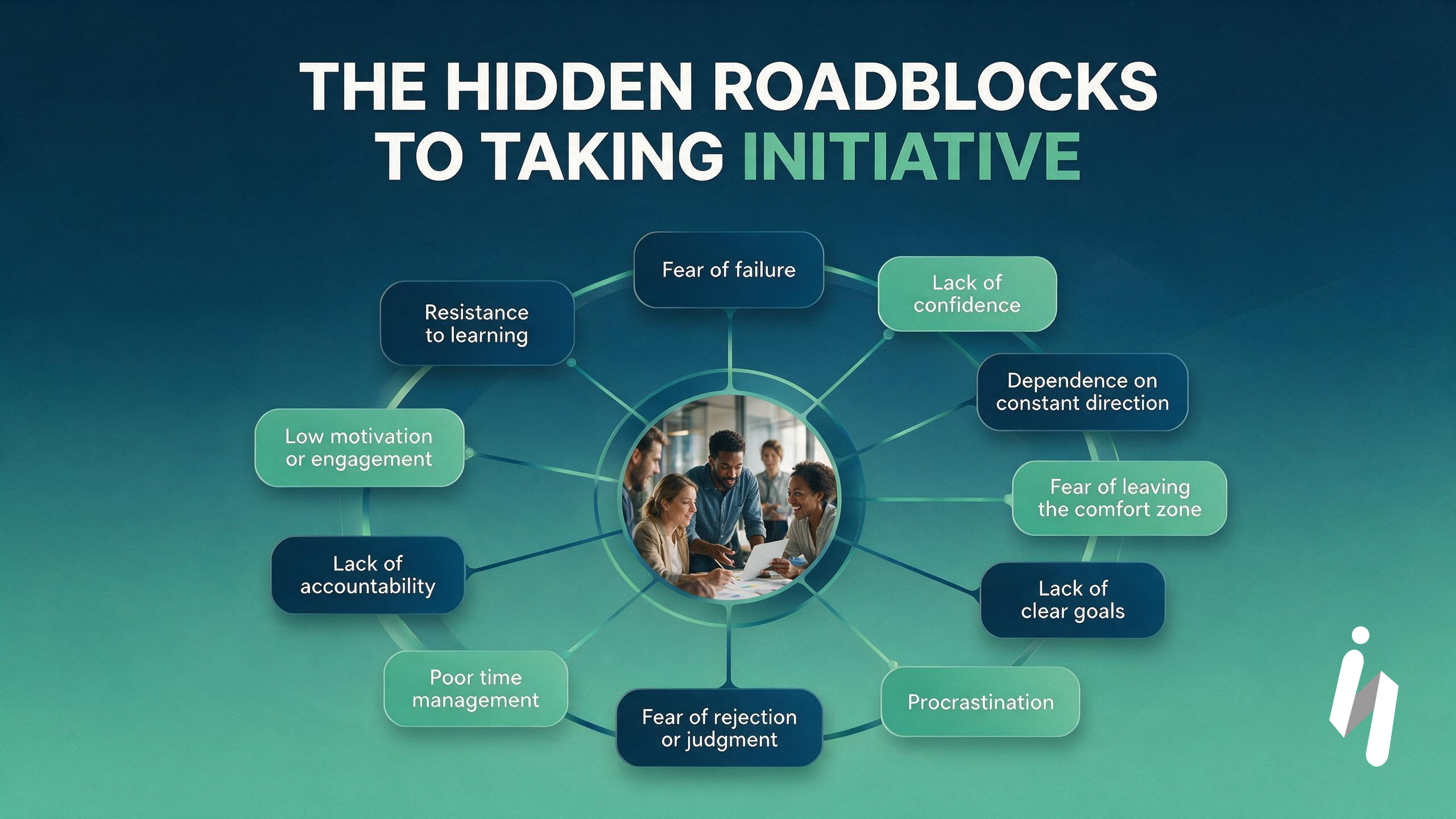
What stops professionals from taking initiative at work?
While the benefits of being a self-starter are clear, taking initiative doesn’t always come naturally to everyone. Many professionals have the potential to become more proactive, but certain habits, mindsets, and workplace challenges can make it difficult to take the first step.
How can you become a self-starter?
The encouraging reality is that self-starter behavior can be developed through deliberate practice. While some people may naturally be more proactive than others, the habits that define successful self-starters are learnable and accessible to anyone willing to put in the effort.
The strategies below are practical steps you can begin applying immediately to strengthen your workplace initiative, improve your workplace accountability, and support long-term professional growth.
Set personal goals
If your only goals come from your manager, your growth may be limited by someone else’s priorities. Create goals that support your career development and long-term aspirations. Consider what skills you want to learn, what experiences you want to gain, and how you want to contribute to your organization.
Take ownership of problems
A common mistake employees make is identifying problems without suggesting solutions. A proactive employee understands that noticing an issue is only the beginning. The real value comes from recommending actions that could improve the situation. Employees working in outsourcing companies often build credibility by bringing solutions alongside concerns.
Develop strong time management habits
Effective self-starters understand how to prioritize high-impact work. Strong organization, scheduling, and prioritization skills help develop greater independence and reinforce your ability to function as an independent worker.
Ask better questions
Instead of asking for detailed instructions, seek context. Understanding objectives, priorities, and desired outcomes helps strengthen your problem-solving skills while reducing dependency on constant supervision.
Volunteer for new opportunities
Growth rarely happens inside your comfort zone. Whether it involves leading a meeting, joining a new project, or learning a new technology, volunteering for opportunities helps develop both confidence and valuable self-starter skills.
Continuously learn
Setbacks are inevitable in every career. Self-starters maintain momentum even when projects fail, deadlines shift, or obstacles arise.
Their resilience allows them to focus on solutions rather than dwelling on problems.
Track and celebrate progress
Self-improvement is easier to sustain when you can see evidence of growth. Track accomplishments, new skills learned, challenges overcome, and goals achieved to reinforce positive habits and support ongoing professional growth.
What are examples of self-starter behavior at work?
The concept of being a self-starter often sounds straightforward in theory, but it becomes much clearer when viewed through real-world workplace situations. Small actions can have a significant impact when employees choose to take initiative instead of waiting for instructions.
The following examples demonstrate how proactive behavior can improve processes, solve problems, and create value across different industries and work environments.
Example 1: Improving a team process independently
A member of a dedicated team notices recurring confusion regarding project deadlines. Without being asked, they create a shared dashboard that provides greater visibility and improves collaboration.
Example 2: Creating documentation before being asked
An employee within an outsourcing company realizes that new hires repeatedly ask the same onboarding questions. They proactively develop training materials that reduce onboarding time and improve consistency.
Example 3: Identifying a recurring issue and proposing a solution
A member of an offshore staff notices delays caused by incomplete client requests and creates a standardized intake form that improves communication and efficiency.
Example 4: Learning a new skill to support a project
An employee supporting one of several outsourcing companies completes additional certification training after identifying a growing client demand, positioning themselves as a valuable resource for future projects.
Example 5: Supporting team success
A professional working within dedicated teams volunteers to mentor newer colleagues, helping improve team capability while demonstrating taking ownership at work beyond their immediate responsibilities.
Whether supporting local operations or managing international projects, businesses benefit from professionals who demonstrate workplace initiative, strong problem-solving skills, and a commitment to continuous improvement.
What makes iSupport Worldwide a great place for self-starters?
Today’s leading employers are increasingly looking for professionals who can think independently, adapt to change, and contribute meaningfully without requiring constant supervision. Whether you’re applying to an outsourcing company, supporting international clients as part of offshore staff, or collaborating within high-performing dedicated teams, the ability to take ownership of your work can quickly become one of your biggest career advantages.
At iSupport Worldwide, self-starters are given the opportunity to thrive in a collaborative and empowering work environment. While many professionals interested in outsourcing careers are seeking stability and growth, iSupport Worldwide offers an offshoring model that allows team members to become valued extensions of their clients’ businesses. Rather than simply completing assigned tasks, employees are encouraged to take initiative, solve problems proactively, and contribute ideas that make a real impact.
Working with global clients also provides exposure to diverse industries, business practices, and professional challenges. This environment enables self-motivated professionals to continuously learn, develop new skills, and build confidence in their abilities. Whether you’re supporting international businesses as part of our offshore staff or working within dedicated teams, you’ll have opportunities to take ownership of your work while collaborating with experienced professionals who support your success.
At the same time, iSupport Worldwide recognizes that professional growth requires both independence and support. Team members are equipped with the resources, guidance, and opportunities they need to expand their expertise and advance their careers. Beyond meaningful work with international clients, get to enjoy the following perks:
- Competitive salary package and benefits
- A fully equipped gym with professional coaches to keep you active and energized
- Free meals, snacks, and drinks to fuel your day
- Top-tier office amenities that make your workspace comfortable and productive
- HMO coverage starting on day one, so you’re protected from your very first day at work
- Training and development certifications for your career growth
- A dedicated engagement team that plans activities to make work enjoyable
- And many more!
Every successful career begins with a single proactive step. Let iSupport Worldwide be the place where your self-starter skills, workplace initiative, and professional growth reach their full potential.
About the Author Shekina P. Malonzo is a Licensed Professional Teacher and multifaceted Content Developer at iSupport Worldwide, specializing in creating tailored materials for the offshoring industry. |
Founded in 2006, iSupport Worldwide is a US-owned offshoring leader based in the Philippines, delivering tailored solutions to enhance operational efficiency and exceed client expectations. Recognized on the Inc. 5000 list of America’s fastest-growing private companies for three consecutive years, honored in Inc. Magazine’s Power Partner Awards, and a recipient of the ACES Award for Inspiring Workplaces in Asia, iSupport Worldwide embodies a commitment to excellence. |