



Executive Summary
High performance and high potential are often viewed as the same thing, but they represent two different strengths in the workplace. High performers are recognized for consistently delivering excellent results, meeting goals, solving problems effectively, and excelling in their current roles. High-potential employees, meanwhile, stand out because of their ability to learn, adapt, influence others, and grow into more complex responsibilities in the future. While both are valuable, understanding the distinction can help professionals take a more intentional approach to their career development.
At iSupport Worldwide, both are valued. Through continuous learning opportunities, career development initiatives, and a people-first culture, team members are empowered to enhance their performance while unlocking their long-term potential. For professionals seeking a workplace that values growth as much as results, iSupport Worldwide provides an environment where careers and future opportunities can become reality.
In every workplace, there are employees who consistently deliver outstanding results and employees who show the ability to grow into future leaders. While these qualities may seem similar at first, they are actually very different. Understanding the difference between high performance and high potential helps organizations make better decisions about talent development, leadership planning, and promotion opportunities.
This distinction has become even more important in today’s competitive business environment, where organizations like offshoring companies are looking for employees who can contribute to immediate success while also helping shape the future of the business.
What is a high performer?
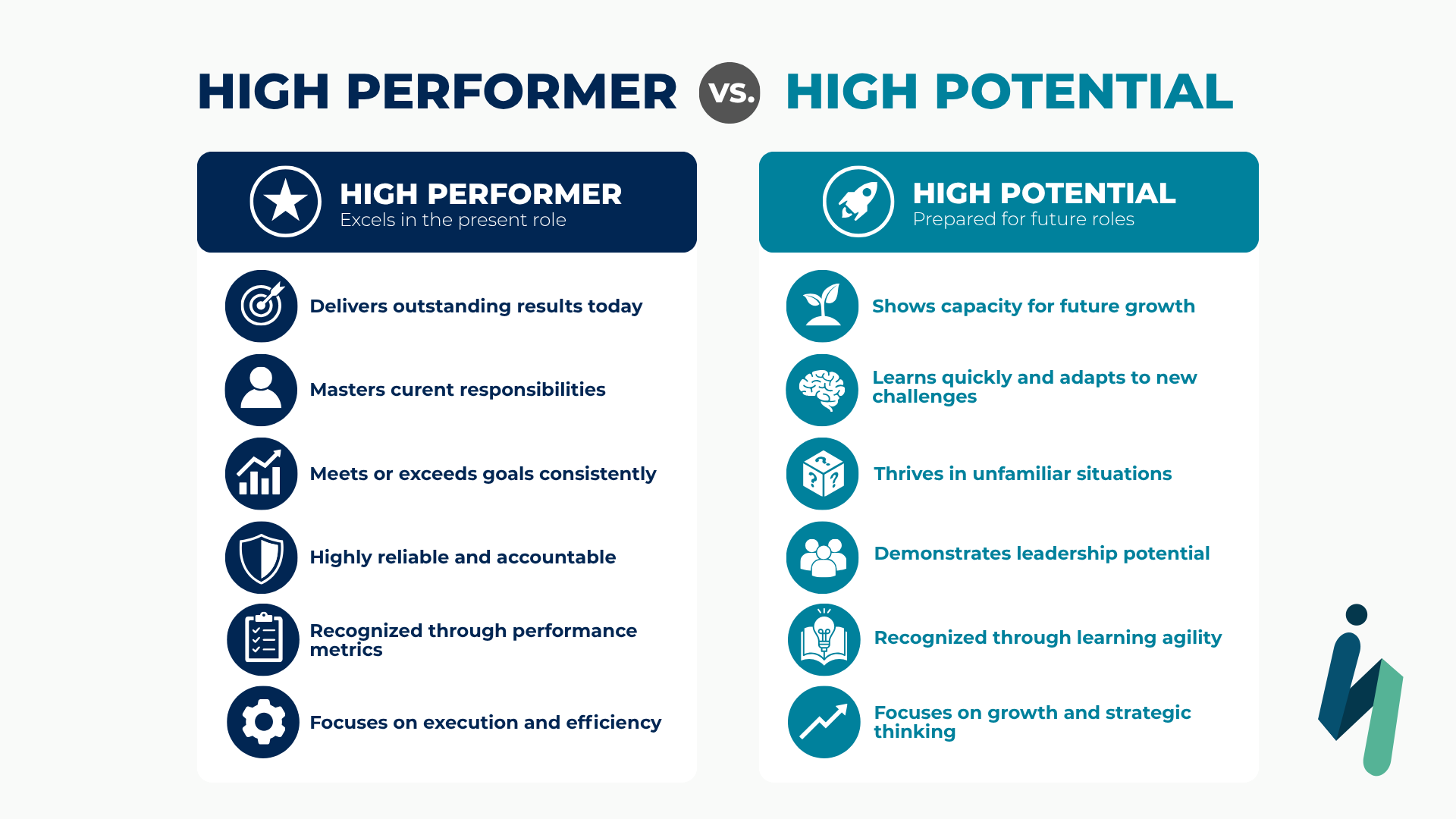
A high performer is an employee who consistently exceeds expectations in their current role. They produce excellent results, meet goals, and solve problems efficiently. They can usually be counted on to deliver quality work regardless of the challenges they face and are considered the backbone of the team.
These employees often become the go-to people because they have mastered their responsibilities and can be trusted to get things done. Their contributions are also easy to see as these are reflected in performance metrics, successful projects, customer satisfaction scores, or productivity levels.
High performers typically demonstrate:
- Strong technical skills
- Consistent achievement of goals
- Reliability and accountability
- Excellent problem-solving abilities
- High levels of productivity
Due to their strong track record, high performers are among the first employees considered when career advancement and promotion opportunities become available.
However, performing well in a current role does not always mean someone is ready for a more complex role in the future.
What is a high-potential employee?
A high-potential employee, often called a “HiPo,” is someone who has the ability to grow into larger and more challenging roles over time. While they may already perform well, their greatest strength lies in their capacity to learn, adapt, and take on responsibilities they have never handled before.
A Forbes article citing Harvard Business Review notes that companies typically identify only 3% to 5% of employees as high-potential talent, underscoring how selective these programs are.
Potential is less about what an employee is doing today and more about what they may be capable of doing tomorrow.
High-potential employees often have:
- Leadership qualities
- Strong learning agility
- Adaptability to change
- Strategic thinking
- Emotional intelligence
- Curiosity and initiative
They are the employees who are willing to step outside their comfort zones, take on new challenges, and continuously develop new skills. Organizations often invest heavily in professional development programs to help these individuals prepare for future leadership positions.
According to research from CEB (now Gartner), as cited by Forbes, high-potential employees deliver 91% more value to organizations than their peers, making them critical contributors to long-term business success.
Here's why performance and potential are often mistaken for the same thing
For many professionals, the difference between performance and potential is not something they think about until discussions around career advancement or promotion opportunities begin. When someone consistently delivers excellent results, takes ownership of their work, and exceeds expectations, it’s easy to assume they also have the greatest potential for future success.
This assumption exists because performance is often the most visible indicator of talent. Strong performers stand out. They achieve goals, solve problems, and contribute measurable value to the organization. As a result, both employees and leaders can naturally view current success as proof of future capability.
However, performance and potential answer two different questions.
Performance asks, “How well is this person succeeding in their current role?” Potential asks, “How well could this person grow into a future role?”
This distinction is important for professionals to understand because many employees focus heavily on becoming excellent at their current job, believing that outstanding performance alone will lead to career advancement. While strong performance is essential, organizations also look at an employee’s ability to learn new skills, adapt to change, handle greater complexity, and take on responsibilities beyond their current role.
Understanding this helps professionals view their own development more strategically. If you only measure success by how well you perform today, you may overlook the qualities that prepare you for tomorrow’s opportunities. On the other hand, recognizing the difference between performance and potential can encourage you to pursue professional development, seek broader experiences, and take advantage of career growth opportunities that build future readiness.
The main takeaway is that performance gets you noticed, but potential often determines how far you can go. Knowing the difference allows you to better position yourself for future promotion opportunities, make more intentional career decisions, and build a stronger path toward long-term career advancement.
Are you a high performer or a high-potential employee?
For professionals wondering where they fit, an honest self-assessment can be enlightening.
Ask yourself:
- Am I primarily recognized for what I accomplish today?
- Do I actively seek learning opportunities beyond my current role?
- Can I adapt quickly when priorities change?
- Do I influence others, even without formal authority?
- Am I preparing for future responsibilities or simply excelling in present ones?
The answers may reveal whether you are operating primarily as a high performer, a high-potential employee, or ideally, both.
The good news is that potential is not a fixed trait. Through continuous learning, mentorship, and professional development, employees can expand their capabilities and position themselves for greater career advancement.
Check these five ways to become a high performer or high-potential employee
If your self-assessment reveals that you are currently neither a high performer nor a high-potential employee, don’t be discouraged. These are not fixed labels. Most professionals who are recognized for their performance or potential today developed those qualities over time through deliberate effort, continuous learning, and a willingness to grow.
Here are five practical ways to get started.
Master your current role
Before organizations invest in your future, they need confidence in your present. Focus on consistently delivering quality work, meeting deadlines, and taking ownership of your responsibilities.
A strong foundation of performance makes you more visible and creates credibility for future career advancement opportunities.
Seek learning opportunities beyond your job description
Employees with potential often show curiosity beyond their day-to-day tasks. Volunteer for cross-functional projects, learn new tools, or participate in training programs that expand your knowledge.
Taking initiative in your own professional development signals that you’re preparing for future responsibilities, not just fulfilling current ones.
Become comfortable with change
Potential is often revealed when circumstances change. Instead of resisting new processes, projects, or responsibilities, treat them as opportunities to learn.
Professionals who adapt quickly are often seen as strong candidates for career growth opportunities because they demonstrate readiness for more complex roles.
Learn to influence, not just execute
Strong performers know how to get work done. High-potential employees know how to bring others along with them.
Start by sharing ideas, collaborating effectively, mentoring peers, or helping solve team challenges. You don’t need a leadership title to demonstrate leadership qualities.
Ask for feedback and act on it
Growth begins with self-awareness. Regularly ask managers, mentors, or colleagues where you excel and where you can improve.
Professionals who actively seek feedback and apply it tend to accelerate both their performance and potential, putting themselves in a stronger position for future promotion opportunities.
You don’t need to be a star performer or a future leader overnight. The goal is continuous progress. By improving your current performance while investing in professional development, you can gradually build both the results and capabilities that organizations value most.
The right workplace can bring out the best in every employee
Talent may open doors, but the environment around a person often determines how far they can go. Even the most capable professionals can struggle to reach their full potential if they lack guidance, development opportunities, or a workplace culture that encourages growth.
This is why a supportive work environment plays such a critical role in employee success. It serves as the foundation that allows employees to build new skills, take on challenges, and prepare for bigger responsibilities. Organizations that invest in their people understand that performance is not simply the result of employee effort; it is also influenced by the resources, support, and opportunities available to them.
This philosophy is reflected in iSupport Worldwide’s commitment to its people. Through its dedicated Learning and Development team, employees are provided with continuous learning opportunities designed to enhance both performance and long-term potential. Rather than taking a one-size-fits-all approach, development initiatives are designed to help employees acquire relevant skills, expand their knowledge, and prepare for future promotion opportunities.
The impact of a people-first culture is also reflected in external recognition. iSupport Worldwide’s commitment to employee well-being and development has earned the company recognition as one of the Most Inspiring Workplaces in Asia through the 2024 ACES Awards. Such recognition highlights the importance of creating an environment where employees are valued not only for what they contribute today but also for what they can become in the future.
At the end of the day, becoming a high performer or high-potential employee is not a journey you have to take alone. With the right support, learning opportunities, and culture, growth becomes more than a possibility. It becomes a path. If you’re looking for a workplace that champions professional development, creates meaningful career growth opportunities, and puts its people first, explore a future with iSupport Worldwide today.
Are You More of a High Performer or a High Potential Professional?
About The Author Shekina Malonzo is a Licensed Professional Teacher and Content Developer at iSupport Worldwide, specializing in creating tailored materials for the outsourcing and offshoring industry. She develops content that supports both client engagement and talent alignment. |
Founded in 2006, iSupport Worldwide is a US-owned offshoring leader based in the Philippines, delivering tailored solutions to enhance operational efficiency and exceed client expectations. Recognized on the Inc. 5000 list of America’s fastest-growing private companies for three consecutive years, honored in Inc. Magazine’s Power Partner Awards, and a recipient of the ACES Award for Inspiring Workplaces in Asia, iSupport Worldwide embodies a commitment to excellence. |