



Executive Summary
Rejection is a difficult but expected part of the job search, which often feels personal because each application carries your effort, identity, and hope for a different outcome.
In reality, rejection is rarely about a single shortcoming but a mix of factors such as competition, role alignment, timing, and evolving business needs. Rather than defining your ability, these moments can serve as checkpoints for growth, helping you refine how you present your value, strengthen your confidence, and move closer to roles that truly align with your goals.
Opportunities grow in environments that value adaptability and continuous development, such as iSupport Worldwide. As a global capability center, it offers Filipino talent access to diverse industries, skill-building experiences, and meaningful work with international clients.
“We regret to inform you…”
There is something uniquely disheartening about watching your application status change from “under consideration” to “not selected,” as though all the anticipation, effort, and quiet hope you held has been distilled into a single, unforgiving line of text.
“I can’t help but wonder what I did wrong”
Let’s not pretend that rejection is purely procedural, because anyone who has spent time submitting a job application after job application knows that each one carries a small, unspoken expectation… that maybe this time, things will be different.
Over time, a prolonged job search can begin to feel like a test not only of your qualifications but of your resilience, your patience, and occasionally, your sense of self-worth, especially when outcomes remain unchanged.
You might begin to revisit every moment of your last job interview with an almost forensic level of analysis, replaying each answer, each pause, each fleeting expression, as though clarity might emerge if you simply think about it long enough.
As Forbes explains, “When you receive a rejection, the first instinct is to analyze what went wrong, but the reasons aren’t always clear or within your control.”
And when the only update you receive on your application status is generically phrased or, worse, delayed into silence, it creates an uncomfortable space where doubt has a tendency to grow unchecked.
But here’s what often goes unspoken: rejection feels personal, even when it isn’t intended to be, because you were never just submitting credentials. You were presenting a version of yourself.
“I wish I knew why I didn’t get it”
Behind every rejected job application is rarely a single reason, but rather a mix of factors that shape how your application status ultimately turns out. Many of them are not immediately visible from your side of the job search.
Here are some of the most common reasons:
Mismatch in specific role requirements
Your skills and experience are strong overall but do not align closely enough with what the role demands at that exact moment.
High competition during the job search
Hundreds of applicants are applying for the same role, making even a strong job application one among many equally qualified candidates.
Internal candidates or referrals
Companies may prioritize someone already within the organization or recommended through internal networks, regardless of external job interview performance.
Changing business needs
Particularly in industries like outsourcing and offshoring, hiring priorities can change quickly due to client demands, project timelines, or budget adjustments.
Interview performance nuances
Small factors during a job interview, such as communication style, confidence, or cultural fit, can influence decisions even when qualifications meet the requirements.
Overqualification or underqualification
A candidate may be seen as either not quite ready or, conversely, likely to outgrow the role too quickly, affecting their application status.
Timing and availability
How soon a candidate can start, how quickly decisions need to be made, or where they are in the overall hiring pipeline during the job search process can all influence hiring outcomes, sometimes resulting in a rejection that has more to do with timing than actual capability.
When viewed together, these factors reveal that rejection is rarely a simple yes-or-no judgment, but rather a layered decision shaped by context, timing, and fit.
“I can figure this out one step at a time”
Although it may feel counterintuitive, one of the most valuable aspects of a job search is the accumulation of experiences that do not immediately result in success. These moments, uncomfortable as they are, tend to offer the clearest insights.
Every job interview you go through sharpens your ability to articulate your value, refine your narrative, and recognize patterns in how you present yourself, often revealing strengths and gaps that are otherwise difficult to identify in isolation.
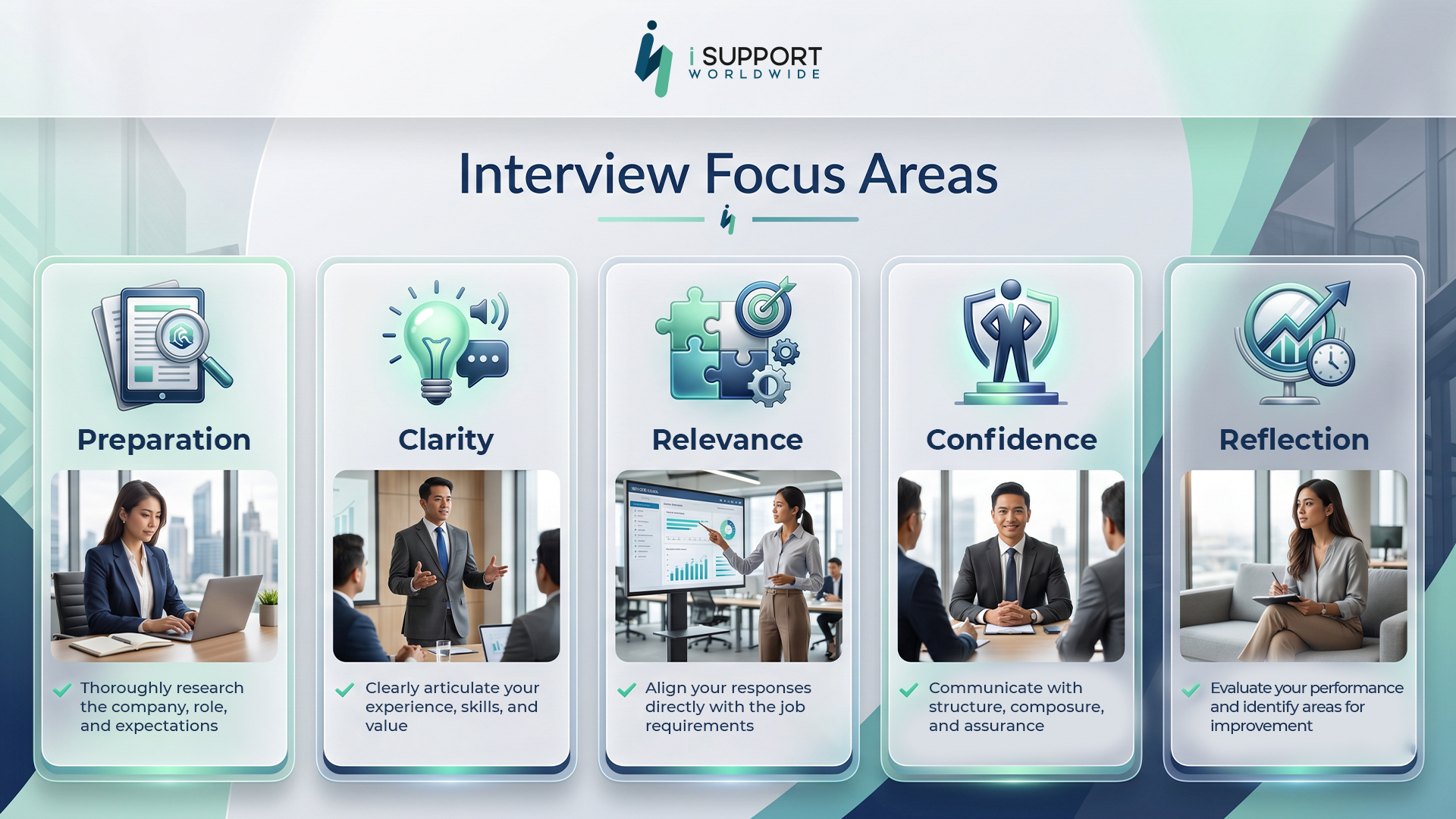
Similarly, each job application you submit contributes to a broader understanding of the roles you are drawn to, the environments you resonate with, and the expectations that define the positions you are pursuing.
Even something as simple or frustrating as monitoring your application status can teach you patience, perspective, and the ability to detach outcomes from effort, which is a skill that extends far beyond the job market.
If rejection is inevitable, then the real advantage lies in how you respond to it, and more importantly, how you sustain yourself through the process without losing clarity, confidence, or direction.
Here are a few practical ways to do exactly that.
Redefine what progress looks like
Instead of measuring your job search purely by outcomes like offers or rejections, you begin to see value in each completed job application, each improved answer in a job interview, and each moment where you show up more prepared than you did before.
Treat every job interview as a two-way evaluation
You are not just trying to impress but also quietly assessing whether the role, the expectations, and the environment align with the kind of career you are actually trying to build.
Refine and don’t repeat your applications
Ensure that each job application evolves slightly from the last, whether through clearer storytelling, stronger positioning of your experience, or better alignment with the role.
Detach emotionally from your application status updates
It is natural to feel invested, but not every change in status reflects your ability, and holding too tightly onto outcomes can make the process far more exhausting than it needs to be.
Keep your narrative flexible, but your direction steady
While your approach may need to adapt throughout your job search, your long-term goals should remain the anchor that keeps you moving forward with intention.
Don’t hesitate to ask for feedback
As highlighted by Fast Company, one of the simplest ways to grow after rejection is to ask for feedback, even if you don’t receive a response.
Reaching out forces you to step back from the emotional weight of rejection and look at your job interview or application more objectively. What worked? What didn’t land as strongly? What would you do differently next time?
“That door closed for a reason I’ll understand later”
Some of the opportunities that passed you by during your job search were not alignments lost, but misalignments avoided.
If you find yourself discouraged in the middle of your job search, staring at yet another update in your application status that did not go your way, it may help to remember that this process, with all its uncertainty and repetition, is not designed to validate you.
You’re not falling behind. A rejected job application does not erase your progress, just as an imperfect job interview does not define your potential. It simply means that the right alignment has yet to happen.
More often than not, that alignment is found in environments that are built for scale, adaptability, and growth, particularly within the world of outsourcing, where opportunities are not confined to a single role or path, but continuously expand based on evolving global demands.
Companies like iSupport Worldwide stand out, not just as an offshoring company, but as a global capability center (GCC) that creates space for Filipino talent to engage with diverse industries, develop valuable skills, and contribute to international clients in meaningful ways.
So if your recent application status did not go your way, consider it not as a closing line, but as a prompt to try again; this time with more clarity, more perspective, and a better sense of where your strengths can truly be applied. In the right environment, one more job application, one more job interview, or simply one more attempt could very well be the turning point to your job search.
About the Author Shekina Malonzo is a Licensed Professional Teacher and Content Developer at iSupport Worldwide, specializing in creating tailored materials for the outsourcing and offshoring industry. She develops content that supports both client engagement and talent alignment. |
Founded in 2006, iSupport Worldwide is a US-owned offshoring leader based in the Philippines, delivering tailored solutions to enhance operational efficiency and exceed client expectations. iSupport Worldwide goes beyond traditional outsourcing by helping companies design and build scalable global operations. Recognized on the Inc. 5000 list of America’s fastest-growing private companies for three consecutive years, honored in Inc. Magazine’s Power Partner Awards, and a recipient of the ACES Award for Inspiring Workplaces in Asia, iSupport Worldwide embodies a commitment to excellence. |