


Executive Summary
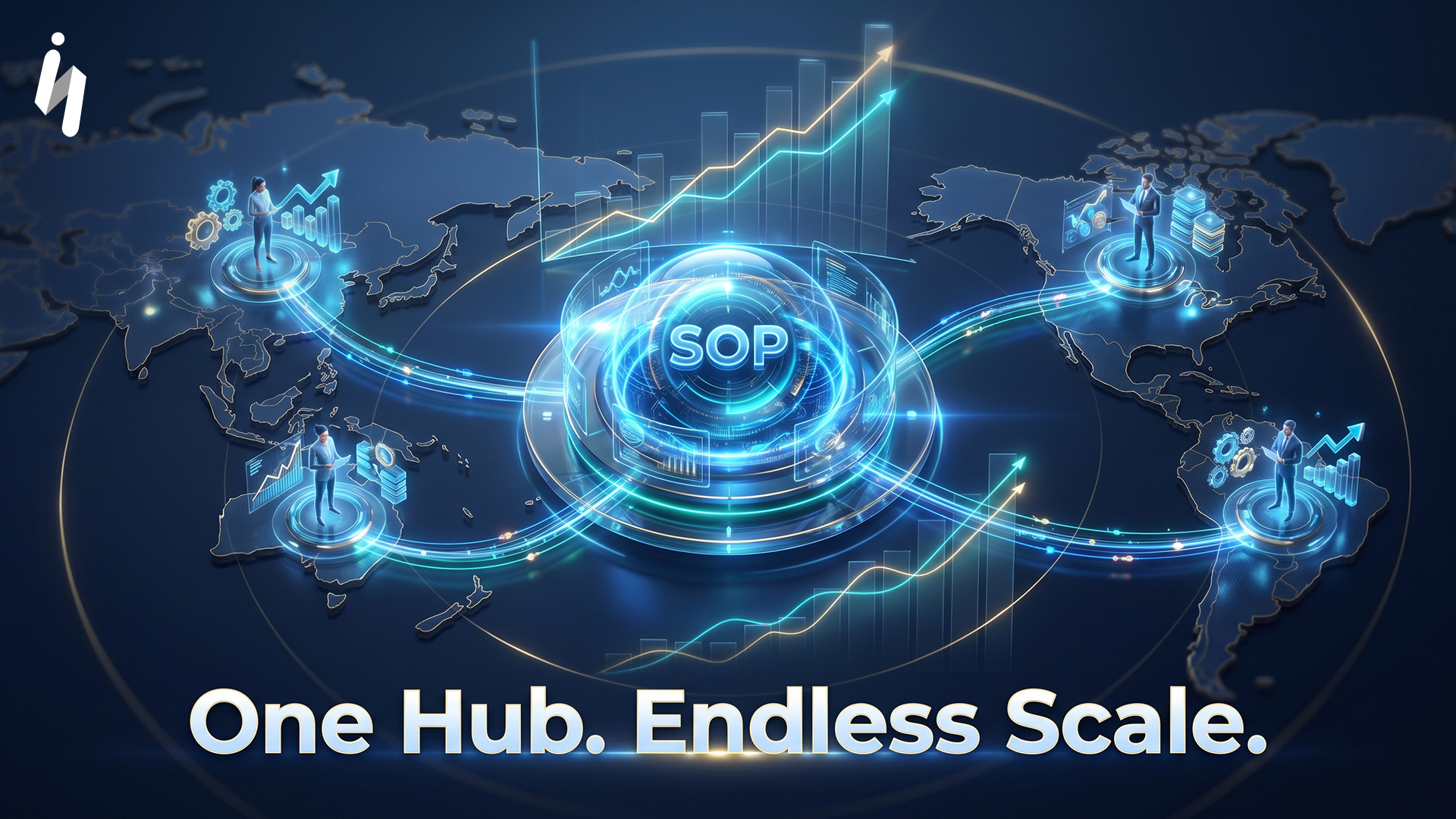
An SOP-based scaling framework enables businesses to grow with consistency, efficiency, and control by documenting and standardizing core processes. SOP-driven models standardize execution across offshore and outsourcing capability teams, enabling predictable scaling, stronger accountability, and consistent quality. For companies building global operations, this is the foundation of scalable, system-driven growth.
Introduction
Growth rarely breaks because demand is missing. It breaks when execution cannot keep up. As teams expand, workflows multiply, handoffs increase, and small inconsistencies turn into larger operational risks. When critical processes exist only in people’s heads, scaling becomes harder to control, harder to measure, and more expensive to sustain.
That is why an SOP-based scaling framework should be viewed as execution infrastructure, not just documentation. It creates an operating system that enables offshore teams to deliver consistently, quickly, and with accountability as the business grows. For companies building dedicated offshore teams or expanding operational capacity in the Philippines, that structure matters because it supports repeatable execution, faster onboarding, and stronger quality control at scale.
What Is an SOP-Based Scaling Framework?
An SOP-based scaling framework combines two critical elements:
- SOP (Standard Operating Procedure): Step-by-step documentation of how to complete specific tasks consistently.
- Scaling framework: A structured system that supports repeatable, predictable growth.
Together, they form the foundation for training, delegation, and operational consistency. This approach is especially valuable for distributed teams, offshore operations, and companies relying on outsourcing in the Philippines, where clear execution standards help teams stay aligned.
The key takeaway is simple. SOPs are not just documents; they are the backbone of repeatable business execution.
Why Businesses Struggle to Scale Without SOPs
Scaling without documented processes creates significant risks that can derail even the strongest growth plans:
- Overreliance on key team members.
- Inconsistent output and service quality.
- Longer onboarding and training cycles.
- Communication gaps across teams.
- Difficulty delegating tasks confidently.
- Process failures are becoming more expensive at scale.
Consider this scenario: a startup scales customer support offshore but struggles with inconsistent response quality. New agents ask the same questions repeatedly, response times vary, and customers receive different answers to the same issue.
Nothing improves until SOPs are introduced, documenting escalation paths, response templates, and quality checklists. Once that happens, training becomes faster, and service quality becomes more predictable.
How Do SOPs Help Offshore Teams Scale Efficiently?
SOPs for scaling a business make offshore teams more efficient because they turn tribal knowledge into repeatable systems. Instead of depending on memory or verbal instructions, teams can follow a shared process that produces consistent results.
Workflow Documentation Creates Clarity
Every task gets broken down into clear, repeatable steps. Offshore agents do not need to guess what to do; they follow a documented process that reduces confusion and errors.
Training Consistency Accelerates Onboarding
New hires learn the same way and receive the same information. That means training becomes predictable, and teams reach productivity faster.
Quality Assurance Becomes Measurable
Checklists and review systems ensure every output meets standards before reaching customers. Quality gaps get caught earlier, which protects the client experience.
Knowledge Transfer Works Across Locations
When workflows are documented, transferring knowledge from one team to another becomes much easier. This matters in outsourcing in the Philippines, where businesses often need to scale quickly without losing control of execution.
Delegation Becomes More Confident
Managers can delegate with more confidence because they know the process will be followed consistently, even when they are not involved in every step.
What Happens When Businesses Scale Without SOPs?
Without standard operating procedures for operations, scaling creates a cascade of problems.
- Process degradation: Each team member interprets workflows differently, and those variations multiply over time.
- Training bottlenecks: Senior staff spend too much time answering basic questions instead of focusing on higher-value work.
- Quality erosion: Errors increase as volume grows because there is no consistent way to verify outputs.
- Accountability gaps: When something goes wrong, no one knows who owns the process or where it failed.
- Continuity risks: If a key person leaves, critical knowledge leaves with them.
A growing e-commerce business experienced this when it expanded offshore. Before documenting fulfillment support, customer issue handling, and reporting processes, the team made repeated shipping mistakes. Orders were delayed, tracking updates were missed, and refunds took too long. After the business introduced SOPs and quality checklists, the offshore team became more reliable and easier to manage.
What Should Be Included in a Scaling Framework?
A strong SOP-based scaling framework should include six practical pillars:
1. Process Documentation
Write down core workflows step by step. Add screenshots, templates, examples, and checklists were helpful.
2. Role Clarity
Define who owns each task, approval, and outcome. Clear ownership reduces confusion and improves accountability.
3. Knowledge Transfer
Ensure workflows can be taught and repeated across teams and locations. Good documentation makes handoffs easier.
4. Quality Control Measures
Include review systems, escalation paths, KPIs, and quality checklists. These help teams maintain standards as they grow.
5. Continuous Improvement
SOPs should evolve as tools, systems, and business needs change. Regular reviews keep them relevant and useful.
6. Technology Enablement
Use project management tools, documentation platforms, CRMs, and collaboration systems to support execution.
These pillars improve operational efficiency in offshoring and create repeatable systems for growth that work across markets and service lines.
How Do You Build SOPs for a Growing Team?
Building SOPs does not need to be complicated. Start with the processes that matter most to performance.
- Identify core processes that are repeated often or carry high business impact.
- Document the current workflow step by step.
- Remove unnecessary variation and standardize the best approach.
- Add quality checkpoints where errors commonly happen.
- Test the SOP with someone unfamiliar with the process.
- Refine it based on feedback and changing business needs.
A finance support team used this method to reduce training time by half. By documenting reconciliation steps, creating error-checking routines, and setting escalation paths for unusual transactions, the team became faster and more accurate.
How Can Offshore Providers Support SOP Implementation?
The right offshore partner does more than fill seats. They help build the structure that makes scaling sustainable.
- They support SOP development and process documentation.
- They create training systems that reinforce consistency.
- They build quality assurance programs aligned with your standards.
- They use technology platforms that make SOPs easier to access and follow.
- They contribute to process improvement as operations mature.
This is where offshoring in the Philippines becomes especially valuable. With the right provider, businesses gain more than labor support; they gain an execution partner that helps protect quality while supporting growth.
Why SOPs Matter for Growth
Standard operating procedures (SOPs) are one of the most practical business growth systems a company can build. They create continuity, reduce dependency on individual employees, and make delegation easier.
They also improve business continuity, make leadership transitions smoother, and support expansion into new service lines or markets. For companies scaling through offshore teams or outsourcing in the Philippines, that level of structure can be the difference between controlled growth and operational chaos.
If you want offshore execution that scales with consistency, SOPs are the starting point.
Consider partnering with iSupport Worldwide to build the systems and offshore structure that support sustainable growth, stronger consistency, and more confident scaling.
About the Author Denise Romero is a copywriter at iSupport Worldwide, specializing in B2B content that helps businesses grow through outsourcing and offshore solutions. She focuses on crafting clear, compelling messaging that resonates with professional audiences and supports strategic marketing goals. |
Founded in 2006, iSupport Worldwide is a US-owned offshoring leader based in the Philippines, delivering tailored solutions to enhance operational efficiency and exceed client expectations. iSupport Worldwide goes beyond traditional outsourcing by helping companies design and build scalable global operations. Recognized on the Inc. 5000 list of America’s fastest-growing private companies for three consecutive years, honored in Inc. Magazine’s Power Partner Awards, and a recipient of the ACES Award for Inspiring Workplaces in Asia, iSupport Worldwide embodies a commitment to excellence. |