



Executive Summary
A to-do list that never seems to get shorter is a challenge many professionals face. Even after a productive day, new tasks can appear just as quickly as completed ones disappear.
Fortunately, reducing workload is not always about working faster or doing more. By identifying task multipliers such as excessive approvals, recurring follow-ups, duplicate processes, and other sources of unnecessary work, individuals and organizations can focus on preventing tasks from being created in the first place.
This focus on reducing unnecessary work is one reason many organizations invest in structured workflows and specialized support teams. When responsibilities are clearly defined and processes are managed efficiently, businesses can minimize bottlenecks, improve productivity, and allow employees to focus on higher-value work that drives meaningful results.
At iSupport Worldwide, professionals have the opportunity to grow their careers while contributing to meaningful business solutions. Through dedicated teams, employees support global organizations across customer service, technical support, administration, and back-office operations, gaining valuable international experience along the way. As one of the trusted offshoring companies connecting Filipino talent with global opportunities, iSupport Worldwide provides an environment that fosters collaboration, continuous learning, skill development, and long-term career growth.
There is something oddly frustrating about ending a busy day with the feeling that you accomplished a lot, yet somehow have even more work waiting for you tomorrow. It can feel like trying to empty a bathtub while the faucet is still running.
Most people respond by looking for better ways to manage their workload. They search for productivity tips, organizational tools, or new systems to help them keep up. While these approaches can be helpful, they often address the symptoms rather than the cause.
Before focusing on how to get through your list, it may be worth understanding why it keeps growing in the first place.
Identify the tasks that create more tasks
These are what we can call task multipliers. They are activities that create additional work faster than they deliver meaningful progress.
Every organization has activities that unintentionally create additional work. Identifying these task multipliers is the first step toward reducing unnecessary workload.
This does not mean you should eliminate reports, meetings, or project updates altogether. In fact, many of them are essential for collaboration, decision-making, and accountability. The key is to recognize when these activities create unnecessary follow-up work and to plan for them effectively. A well-structured meeting, a clear report, or a thorough project update can reduce confusion, minimize back-and-forth communication, and prevent additional tasks from piling up later.
A simple way to identify task multipliers is to ask:
“Will completing this task solve something, or will it simply create another task?”
The more tasks that fall into the second category, the longer your to-do list becomes.
Look for approval bottlenecks
Approvals help maintain quality and reduce risk, but unnecessary approval layers can turn straightforward work into a chain of reviews, revisions, and follow-ups.
If a simple task requires several sign-offs before moving forward, examine whether every reviewer is adding value or simply extending the process.
The goal isn’t to eliminate approvals. It’s to recognize when approvals create more administrative work than business value.
Eliminate duplicate processes
According to Asana’s Anatomy of Work Index, employees spend 60% of their working time on coordination and administrative activities rather than on skilled work, with the average knowledge worker losing 103 hours each year to unnecessary meetings, 209 hours to duplicative work, and 352 hours talking about work.
Duplicate work often hides in everyday workflows, making it one of the easiest causes of an ever-growing to-do list to overlook. Teams may update multiple trackers with the same information, prepare different versions of the same report, or manually transfer data between systems that serve similar purposes. Each task may only take a few minutes, but together they create a significant amount of unnecessary work.
To identify duplication, examine where information is being created, updated, or shared multiple times. Ask whether a task exists because it genuinely adds value or because it has always been done that way. In many cases, simplifying workflows, consolidating reports, or reducing redundant steps can remove recurring tasks from your team’s workload.
If your to-do list feels overwhelming, the problem may not be the amount of work you’re doing. It may be the amount of work you’re doing more than once.
Think beyond the task and find the root cause
Recurring tasks often point to recurring problems. When the same issue appears on your to-do list week after week, repeatedly solving it rarely reduces workload in the long run. Finding and addressing the root cause is often more effective than completing the task faster.
For example, if you constantly follow up on incomplete requests, the issue may not be the follow-up itself. The actual problem could be an unclear request process, missing instructions, or a lack of accountability. Similarly, if colleagues keep asking the same questions, there may be information gaps that need to be addressed.
Instead of asking, “How can I complete this faster?” ask, “Why does this keep happening?” The answer often leads to improvements that eliminate future tasks before they are even created.
The most effective way to shrink a never-ending to-do list is not always to finish more work. Sometimes, it’s to stop the same work from returning.
Break the follow-up cycle
Many professionals spend substantial time coordinating work rather than completing it. Research from Asana shows that employees spend more than half of their workday (58%) on “work about work” activities, such as coordinating projects and managing processes, leaving less time for meaningful, high-impact work.
Recurring follow-ups may therefore indicate larger problems involving unclear ownership, missing information, or poor visibility.
Consider whether the work needs dedicated ownership
Work tends to expand when responsibilities are shared but ownership is unclear. When several people handle different parts of the same process, tasks can become delayed, duplicated, or forgotten altogether. This often leads to more meetings, more follow-ups, and more administrative work to keep everything moving.
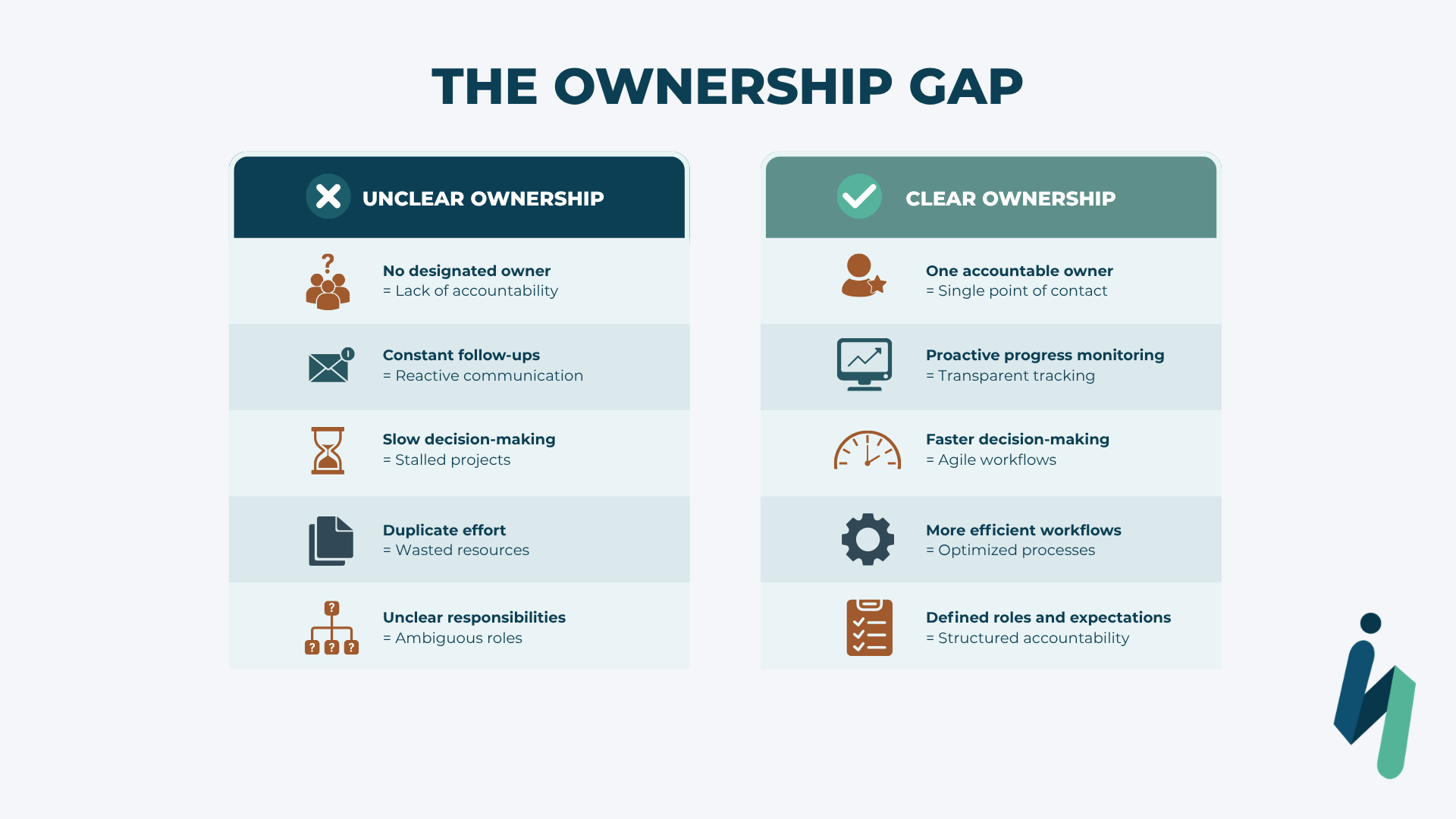
workflows. With clear ownership, accountability improves, expertise develops faster, and less time is spent coordinating work.
This approach is commonly seen among growing businesses and even offshoring companies, which often build dedicated teams to support customer service, back-office operations, and administrative functions. Because responsibilities are clearly defined, less time is spent coordinating work and more time is spent completing it.
Before adding another task to your to-do list, consider whether the issue is truly a workload problem or simply a lack of dedicated ownership. Often, the difference between a smooth workflow and a never-ending one comes down to who is responsible for keeping it moving.
Renegotiate priorities when your plate is already full
When new responsibilities keep arriving without any adjustment to existing priorities, no amount of productivity hacks will stop your to-do list from growing. In these situations, the solution may be to renegotiate priorities rather than simply work harder.
Instead of automatically accepting every new request, have a conversation about trade-offs. Ask questions such as:
- Which priority should this replace?
- What work can be delayed or delegated?
- Which deadlines are most critical?
Renegotiating work isn’t about avoiding responsibility. It’s about creating clarity. When expectations align with available capacity, teams can focus on the work that delivers the greatest impact instead of spreading attention across too many competing priorities.
The source of work matters as much as the work itself
A never-ending to-do list is not always a sign that you’re overloaded with work. More often, it is a sign that work is being created faster than it is being resolved.
Approval bottlenecks, duplicate processes, recurring issues, unclear ownership, and constant follow-ups all have something in common: they generate additional tasks that keep filling your list.
The goal should not be to become an expert at managing endless work. The goal should be to understand why the work is endless in the first place.
Once you begin identifying task multipliers, eliminating duplicate effort, simplifying processes, and assigning clear ownership, you’ll most likely discover that one of the most effective ways to reduce workload is not by doing more, but by preventing unnecessary work from being created at all.
Build a career that creates solutions
At iSupport Worldwide, we believe great professionals do more than complete tasks. They help improve processes, solve problems, and contribute to meaningful outcomes. As part of our dedicated teams, employees work alongside global businesses, supporting functions such as customer service, technical support, administration, and back-office operations while gaining valuable experience in international work environments.
As one of the trusted offshoring companies connecting Filipino talent with global opportunities, iSupport Worldwide offers a workplace where collaboration, continuous learning, and professional growth are part of the everyday experience. Whether you’re an experienced professional or someone looking to take the next step in your career, you’ll have the opportunity to develop in-demand skills, work with dedicated teams, and make a real impact on how businesses operate around the world.
If you’re looking for a career where your contributions matter and your growth is a priority, explore opportunities with iSupport Worldwide and discover where your skills can take you.
5 Ways Clear Ownership Drives Faster, Better Results
About The Author Shekina Malonzo is a Licensed Professional Teacher and Content Developer at iSupport Worldwide, specializing in creating tailored materials for the outsourcing and offshoring industry. She develops content that supports both client engagement and talent alignment. |
Founded in 2006, iSupport Worldwide is a US-owned offshoring leader based in the Philippines, delivering tailored solutions to enhance operational efficiency and exceed client expectations. Recognized on the Inc. 5000 list of America’s fastest-growing private companies for three consecutive years, honored in Inc. Magazine’s Power Partner Awards, and a recipient of the ACES Award for Inspiring Workplaces in Asia, iSupport Worldwide embodies a commitment to excellence. |